Mawaru Penguindrum is an original anime from 2011, directed by Ikuhara Kunihiko. It is also, after Revolutionary Girl Utena, another work by Ikuhara that pushes the boundaries of the animation medium. Its nonlinear narrative, theatrical techniques, and exploration of the concept of “destiny” create vortex after vortex of meaning, opening the work to multiple interpretations.
Destiny is what you experience, that
Is its name and definition, and is your name, for
The wide world lets down the hand in shame:
Here is the human shadow, there, of the wide world, the fame.Robert Penn Warren, Island of Summer, XV. The Leaf
Note: At the time of writing, I had only watched half the series (12 episodes).
Surreal Autonymy of the Penguindrum
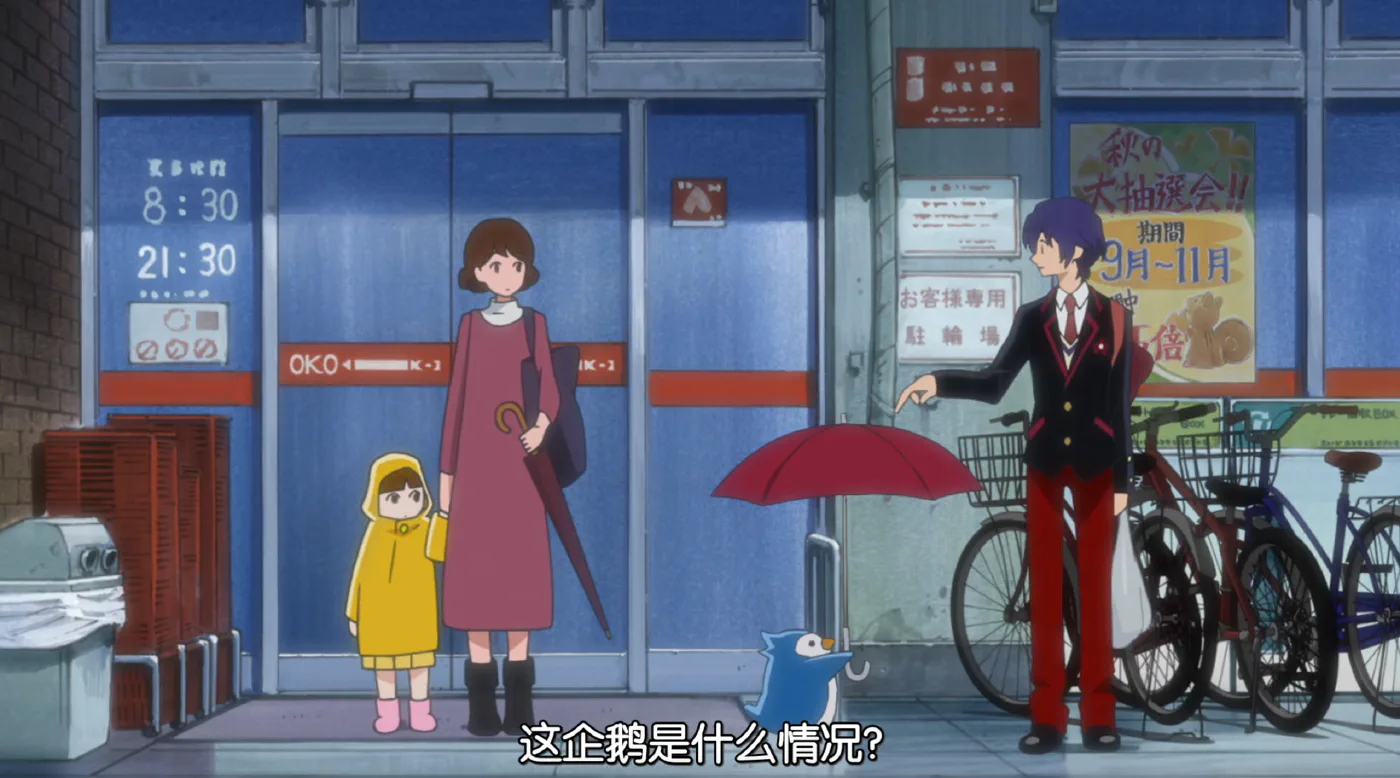
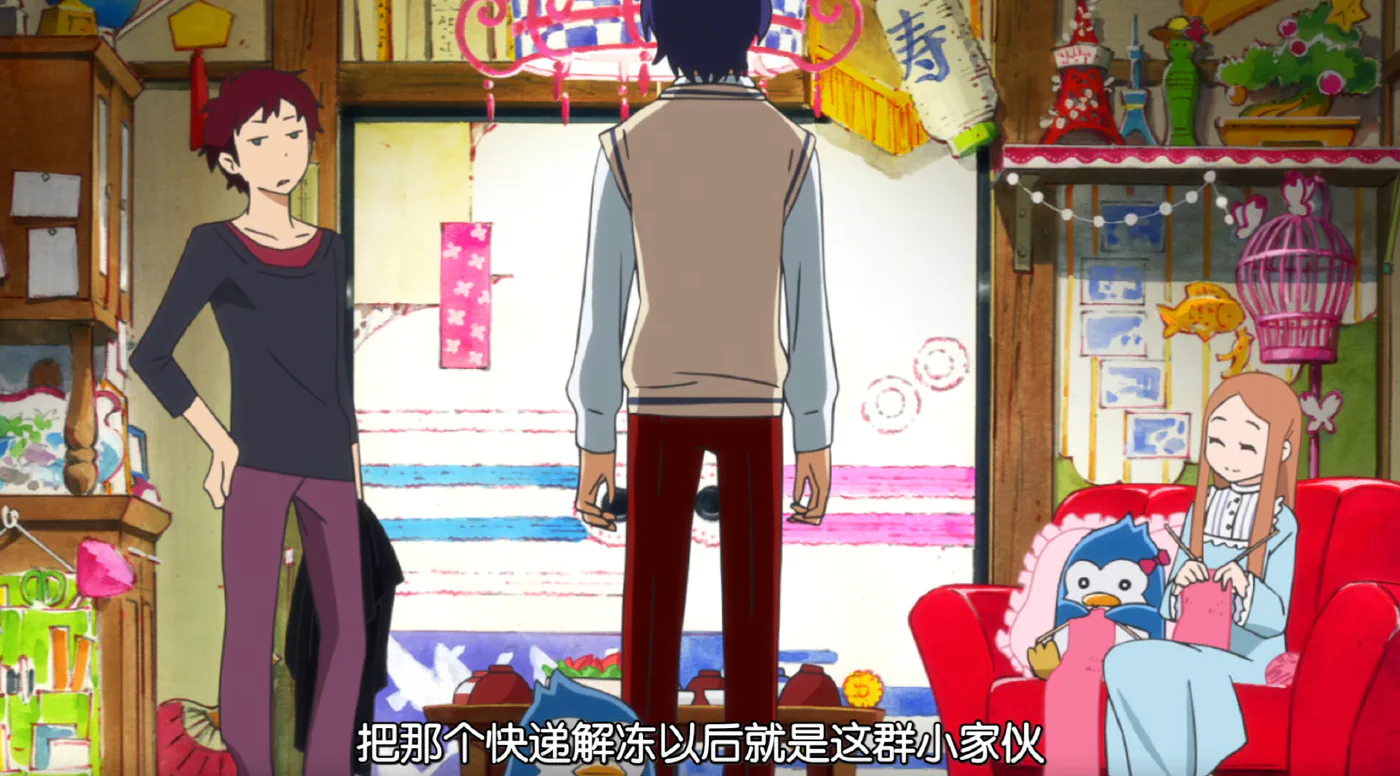
The penguins appear at the start of the story, seemingly without warning, dropped into the protagonists’ lives: via refrigerated transport, someone delivers penguins to the Takakura household. Takakura Shōma is initially uneasy and uncomfortable with their presence, but they quickly settle into coexistence. The penguins’ behavior and mode of appearance signal a rupture in the everyday. Passersby cannot see the “penguins,” and so this drama of destiny begins with the penguins as its point of entry: those who can see the penguins are the ones chosen by destiny. Step by step, the entire story departs from the familiar Japanese high school life and races headlong into the fantastical. The penguins, as auxiliaries to the protagonists, have their own actions, which typically do not interfere with the plot or the protagonists’ actual decisions.
The penguins are like the absurd atmosphere enveloping this work. Through the penguins, the anime’s realist quality is weakened, yet a layer of evocative constructedness is added. The penguins’ actions correspond closely to those of the protagonists; they are a pet-like presence that “simulates human actions alongside the characters, helping them or doing nothing in particular.” They are a special technique used by the production team to fill the anime’s negative space, and also an alternative reading of the characters’ behavior. In traditional animation, pillow shots serve to slow the narrative pace, give the audience time to reflect on the plot, and create a space of pure visual abstraction. 1 In Penguindrum, however, many pillow shots are populated by the penguins’ presence. The narrative deceleration is reduced, while the viewer is offered a perspective distinct from that of the protagonists: the penguins’ perspective. Sometimes they obliquely express the protagonists’ subconscious; at other times they appear as comic figures, humorously satirizing the protagonists’ behavior. The penguins’ perspective adds a narrative layer to Penguindrum, highlighting the distinctive properties of “animation” as an independent artistic medium: it is “pure image,” transcending mere “imitation of reality,” possessing deeper significance.
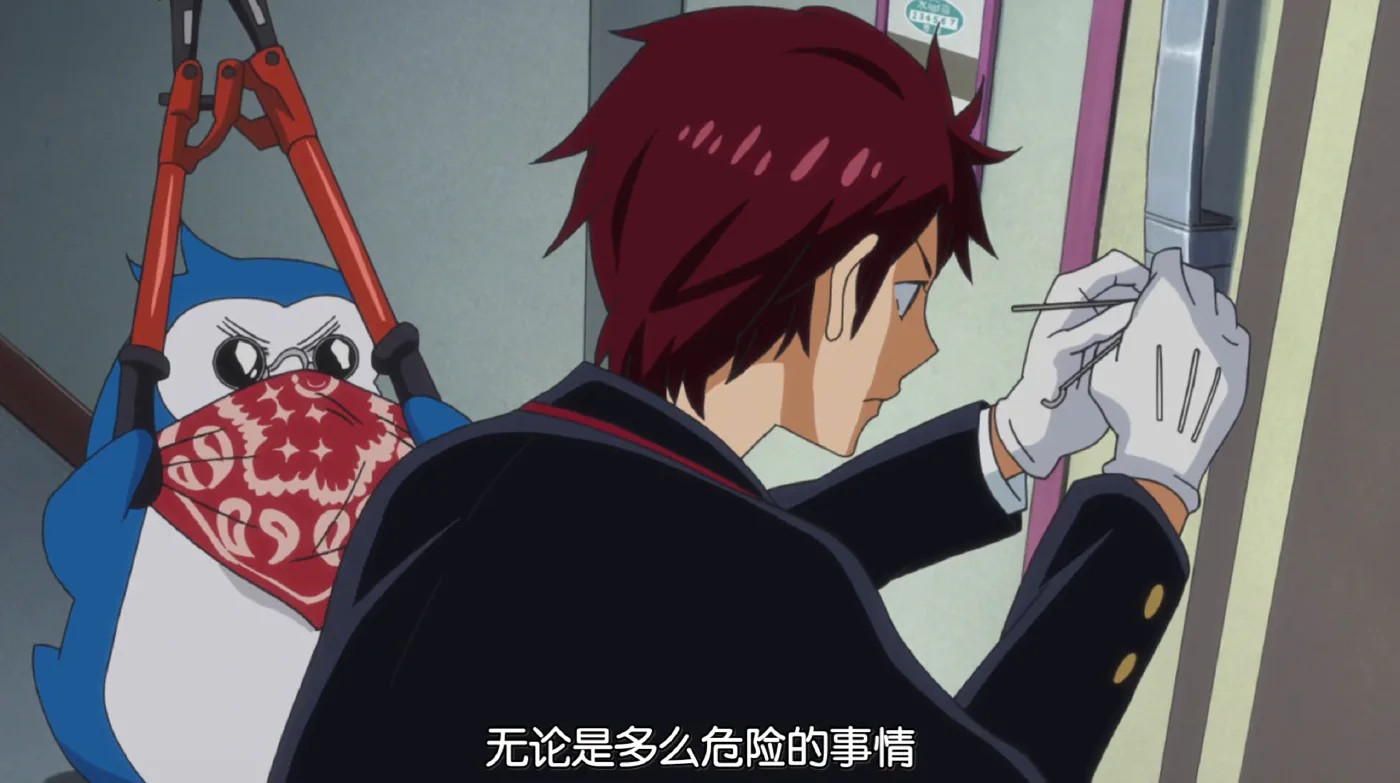
As Roland Barthes writes in Roland Barthes by Roland Barthes, “the disconcerting reproduction, the one that interests, is the disjointed reproduction,” 2 the penguins replicate the psychology and behavior of the protagonists, deconstruct the meaning of those actions, and generate fresh interpretations. “All of this is autonymous: the unsettling (comedic and banal) squint of a circular activity. Like anagrams, reversed superimpositions, scrambled levels.” This fresh interpretation is a distortion and mutation of the protagonists’ original actions; it partly defuses the gravity that the anime’s discussion of “destiny” might carry, while enriching the narrative possibilities.
The Marginal Stage of Destiny Drama
The penguins are a metaphor for the audience. Although the penguins receive ample screen time, they remain marginal characters; nothing they do affects the course of the plot. In fact, their presence serves not the plot but another artistic effect: the “alienation/estrangement effect” (Verfremdungseffekt) proposed by the twentieth-century German dramatist Brecht.
In the era before the development of moving-image technology, traditional theater (theater in the Stanislavski system) served the function of reproducing reality, creating an emotional bond between audience and actor through the verisimilitude of the plot. However, in the politically turbulent twentieth century, Brecht treated theater as a small-scale sociological laboratory rather than a simulation of life, emphasizing theater’s capacity to offer the audience opportunities for critique and reflection on real-world problems. Through theater, the fractures buried deep within society could be exposed, making social contradictions visible where they had been invisible.
The core of alienation theory lies in rejecting the audience’s emotional identification with the actor. Brecht emphasized the performative nature of theater, arguing that actors’ performances should make the audience aware that they are “performing a play,” thereby maintaining emotional distance between audience and actor. While watching, the audience should exist in a state of contradiction, an oscillation of feeling: immersed in the drama and experiencing the story, yet remaining vigilant, continually reflecting. “Brecht’s stage must strip away its dramatic charm, refusing to place the audience in the state of emotional excitement, the empathic trance, demanded by dramatic theater. In his view, ’to make the audience laugh at those who cry on stage and cry at those who laugh on stage’ is the realm that great dramatic art should pursue.” 3
Penguindrum is an allegorical drama in the Benjaminian sense, containing a Brechtian metaphorical core. Its presence communicates a message to the viewer: “This story about destiny is a fictional work combining surrealism and symbolism. There are no penguins in real life, just as there is no resurrection, no Survival Strategy. The plot you are watching has been artistically processed, but to some degree it may provoke reflection on your own life. You are observing and watching the characters’ actions; the penguins are also observing and watching the characters’ actions. The penguins are not actors in the drama; the actors are the Takakura family, are Oginome Ringo, not the penguins. Nor are you an actor in the drama. The penguins are like you; the penguins are also members of the audience, and the actors are merely actors.”
The penguins resist the audience’s emotional identification with the characters while, through their humor and entertainment value, dispelling the excessive solemnity and profundity of the destiny drama. Penguindrum is telling a story about destiny: this story will not be the same as each viewer’s own, it does not transmit specific values to the audience, nor does it instruct from above on the meaning of the word “destiny.” The meaning of this work, and the meaning of “destiny” it conveys, is not rigidly wrapped in a single concept but is loose, split, and fragmented. Penguindrum is not a Hamlet-esque fate-tragedy: “destiny” is not the invisible, silent wheel of God that renders everything futile and fatal. Through Penguindrum, Ikuhara Kunihiko challenges the traditional concept of “destiny,” revealing its other possibilities. “Destiny” as a concept is not a grand, dominant presence. Penguindrum gives “destiny” a postmodern turn: it doubts the “greatness” of destiny, allowing the miracles of destiny to be born in countless trivial moments. 4
The Penguin Hat’s Anti-Quotidian Hymn
Related to the penguins is the penguin hat that grants Takakura Himari her life. The connection of penguin hat to Himari’s life seems to reveal Deleuze’s concept of life-machine. It is like a “destiny” machine: through “destiny,” characters become connected with one another, generating a series of events. A conflict arises here: the penguin hat plays a commanding role in the work, controlling Takakura Himari’s life. But is this “control” truly the embodiment of the symbolic order / the big Other?
The symbolic is a system of signs, a cultural and social construction. The rules and norms of the symbolic are the rules and norms of society. The appearance of the penguin hat means the Takakura household’s life has entered an adventure game. It is the entrance to a game, not an entire set of norms and the unconscious.
Because it is a special existence, an object that drifts outside of reality, the rules of the symbolic lose their power over it. Conversely, it is an anti-quotidian thing, meaning it inaugurates a series of surreal, or even anti-real, transformations. This is why the penguin hat is a machine: it connects with other machines, expanding the protagonists’ storylines.
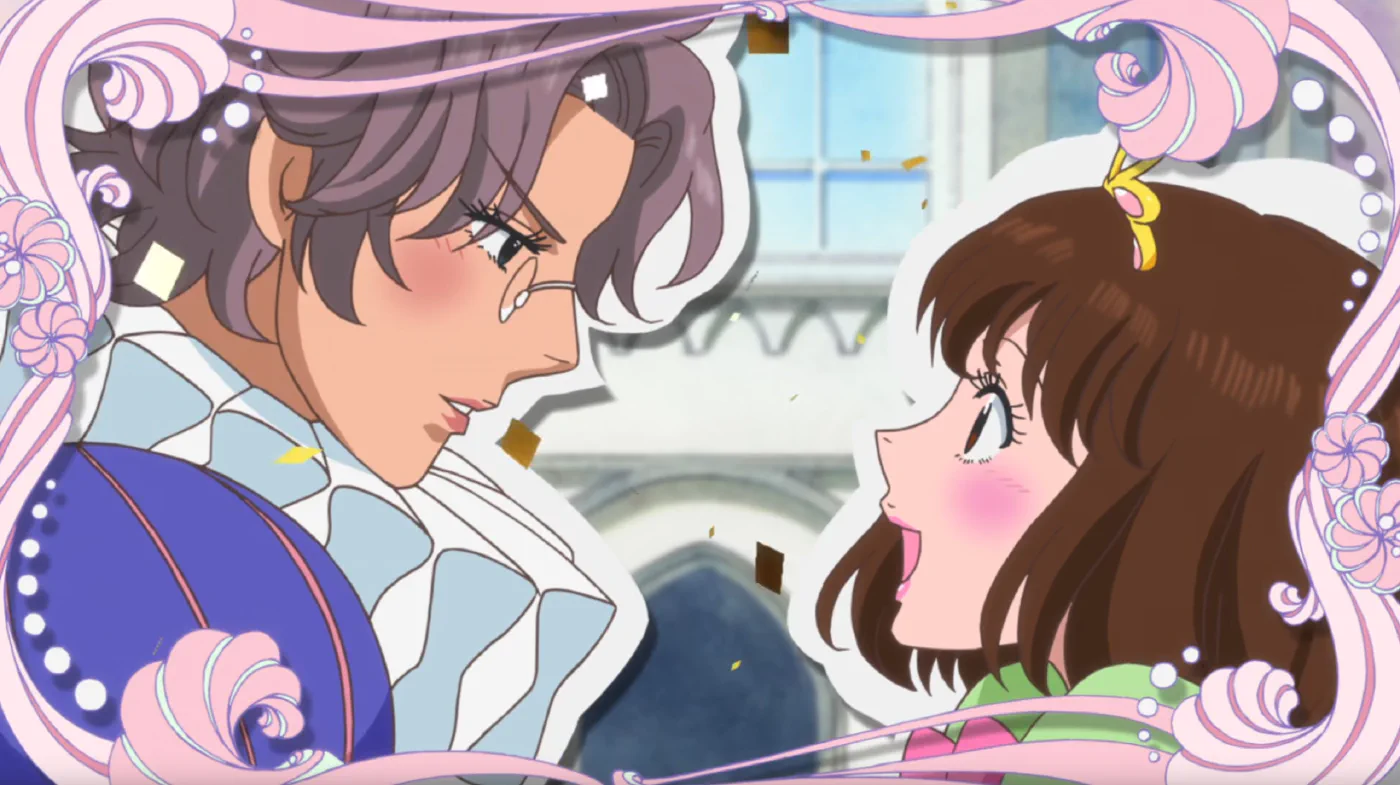
Also belonging to the category of machine is Oginome Ringo/Momoka’s diary. The writing in that diary is the imagined product of a deceased person; it is fictional, or: literary. The diary mirrors future destiny; Oginome Ringo, obstinately acting according to its entries, acquires a new identity within her own operatic fantasy. The diary serves as her guide, directing her actions rather than constraining them.
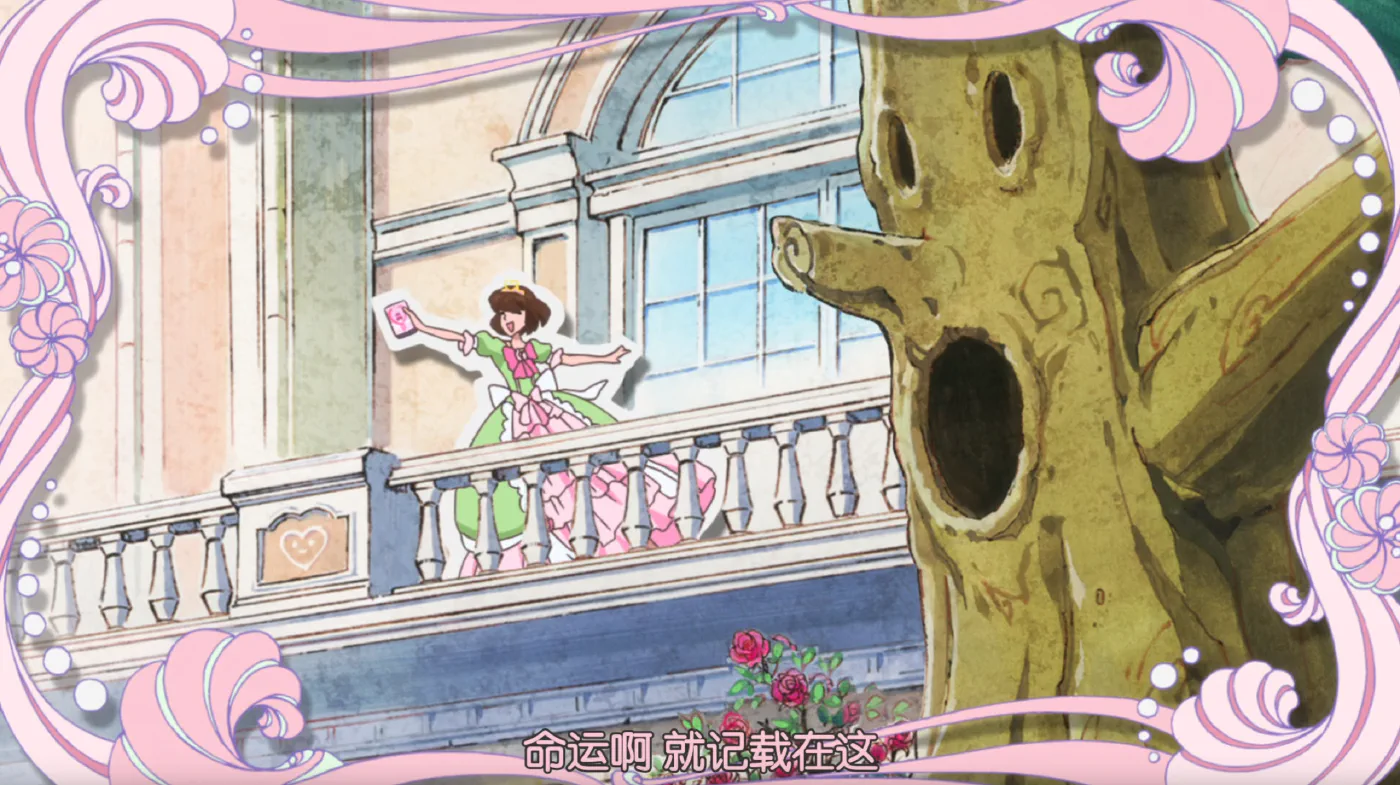
In Oginome Ringo’s interaction with the diary, her fantasy of becoming Tabuki Keiju’s wife is choreographed into operatic scenes (though the Western film format also appears, most are opera). This resembles Mishima Yukio’s adoration of Tenkatsu in Confessions of a Mask:
Soon I saw the curtain of “Night” drawn open before my eyes. It was the stage of Shōkyokusai Tenkatsu (she was performing at Shinjuku Theatre, a rare occasion). …Her voluptuous waist, wrapped in the raiment of the Great Whore from the Book of Revelation, strolled leisurely across the stage. …And so I burst magnificently into my grandmother’s bedroom, unable to contain my hilarity and excitement, shouting and running in circles. “Tenkatsu is here! I am Tenkatsu!” 5
In Confessions of a Mask, Mishima describes the gazes of others witnessing his performance:
In the room were my grandmother lying in her sickbed, my mother, an unfamiliar guest, and the maid tending the sickroom. I saw no one. One might say I saw only myself. All my fervor was concentrated on a single awareness: I had to draw every gaze to my performance as Tenkatsu. Occasionally I glanced at my mother; her face was slightly pale, and she sat there blankly. When she met my eyes, she immediately lowered her brow. I understood. Tears seeped from my eyes. At that moment, what did I understand? Or what was I forced to understand? 5
What can be glimpsed from this passage is that Mishima’s subjectivity and desire are realized through the pursuit of performance, similar to Oginome Ringo’s interaction with the diary. Unlike Oginome’s situation, however, Mishima’s performance draws the violent gaze of the Other. This is Sartre’s “gaze”: under the mother’s eyes, Mishima “understood.” His “understanding” is the process of converting his subjectivity into objectivity. Before, his heart contained nothing but the fervor of performance, but this fervor was quickly extinguished by his mother’s cold stare. At that moment, what was he forced to understand? He understood that he was no longer “Mishima Yukio” the character, nor was he Tenkatsu. He was his mother’s son; this identity had already been imposed upon him. He knew he was no longer free. His artistic “externalization” had become powerless “alienation.”
If Mishima’s mother is the embodiment of the symbolic order / the big Other, then Mishima’s performative desire stands opposed to it. The desire to perform challenges social expectations and cultural norms; it destroys the constraining gaze of others, refuses self-surveillance. What erupts from this gap is the flame of life.
What the penguin hat breaks is the continuity of the everyday and the horror of monotony. On the terror of the everyday and the modern world’s alienation from the inner self, Baudrillard writes:
Everyday life as closure (Verborgenheit), without the phantom of the world, without the alibi of participating in the world, is unbearable. It needs some of those images and signs that are produced by this transcendence. We have already found that its tranquility needs a dizzying sense of reality and history. 6 (Note: bold is original)
The tranquility of the everyday is a powerful oppression, engulfing life, seizing time. The generalization of the everyday leads to people’s “inauthenticity”; people are trapped in social norms and daily trivia, feeling indifferent and entitled about their own existence. Everyday life is estranged from a deeper understanding and experience of life. Similarly, Cioran writes in the chapter “A Changed View of Mediocrity” in On the Heights of Despair:
Since I’m not going to die right away, nor recover my innocence, repeating the same old routine every day is pure madness. Mediocrity must be overcome at all costs; the path must be cleared for transformation. How sad to see people ignore themselves, disregard their own destinies, and not rekindle the light within them, or else to see them intoxicated by their own bottomless darkness! 7
Baudrillard, Cioran, Heidegger, and other thinkers unanimously pose the question: “Is this really all life should be?” The passage of time seems to have entered a loop, like the “Endless Eight” arc in The Disappearance of Haruhi Suzumiya. “Endless Eight” spans eight episodes, each telling essentially the same plot but using different camera angles, costumes, and other elements. It is arguably Kyoto Animation’s boldest experimental attempt, sparking enormous controversy upon airing and deeply affecting viewers (who watched virtually identical plots for eight consecutive weeks). Yet the shock concealed behind it is nothing more than everyone’s ordinary daily life, with only minute variations. “Endless Eight” cruelly peels open the absurdity of time, forcing the audience to confront the desolation of the everyday.
To this, Cioran responds with a cursing fervor:
To have a ghostly hand, as transparent as an invisible image, as tense as the last spasm… Or a heavy, menacing, cruel, hard hand! Hands should reveal more to us than words or sighs, smiles or prayers. 7
And this hand is the penguin hat and diary, thrusting transformation forward with magnificent flourish. The diary text bursts open in a star-shaped pattern, 8 recklessly offering itself to the reader. A star-burst text opens itself to interpretive possibility, allowing the reader (Oginome Ringo) to perform multi-dimensional readings and translate them into action. Like astrology and tarot cards, it gives the reader an inexhaustible source of momentum, enabling her to create all manner of twisting, memorable events.
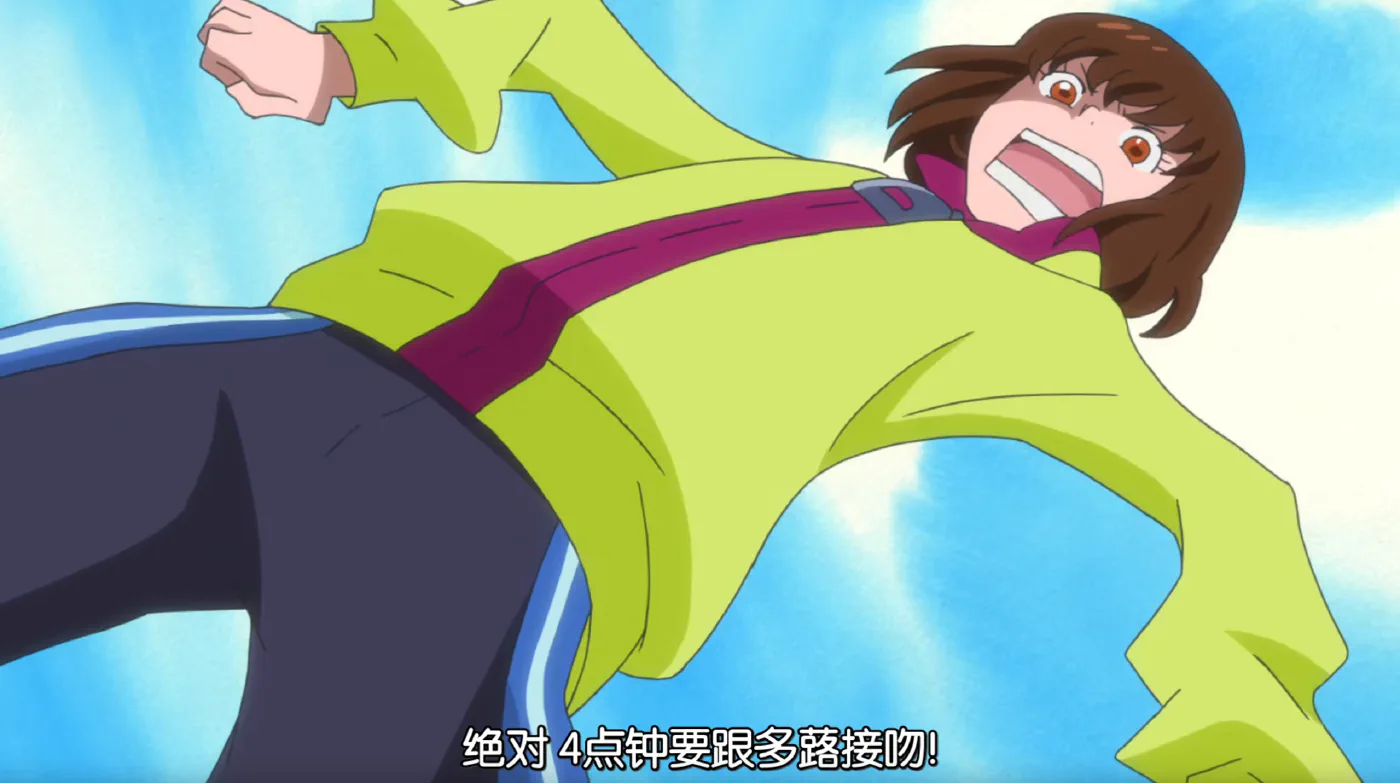
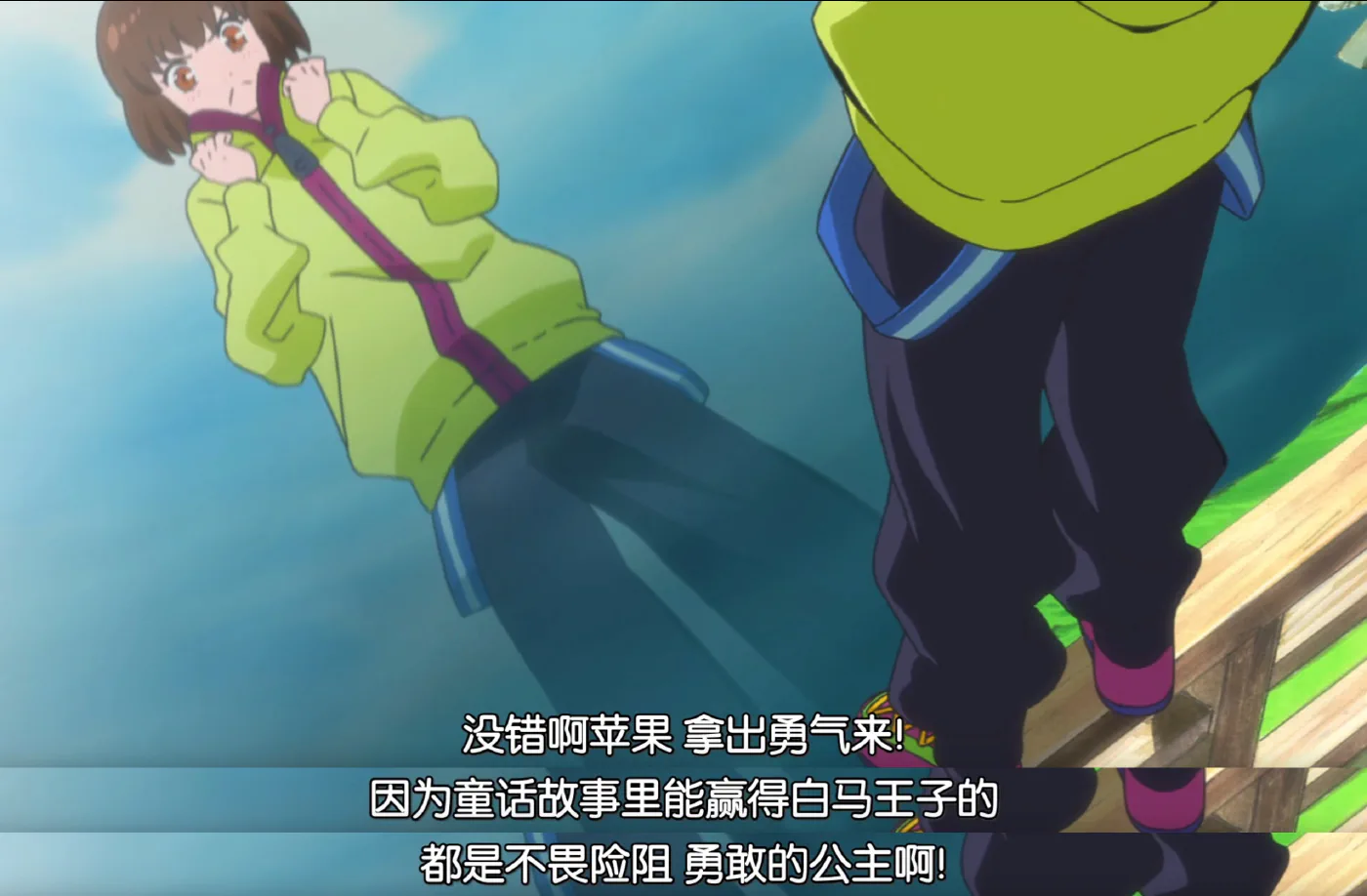
From this perspective, Oginome Ringo, just like the title of episode four of Penguindrum, fully deserves to be called a falling princess. At the same time, the connection of penguin hat to Himari’s life is also the connection of life to machine.

Let’s Initiate the Survival Strategy!
At the beginning of episode one, Takakura Shōma says:
I hate the word “destiny.”
Birth, encounters, farewells. Success and failure. Fortune and misfortune in life.
If all of this has been decided in advance by destiny,
then what are we born for?
Those born into wealthy families, those born from beautiful mothers, those born in the midst of famine and war.
If all of this is destiny, then God is absurdly unreasonable and cruel.
From that point on, we had no future.
Because all we knew for certain was that we would never amount to anything.僕は「運命」って言葉が嫌いだ。
生まれ、出会い、別れ。成功と失敗。人生の幸不幸。
それらが予め運命によって決められているのなら、僕たちは何のために生まれてくるんだろう。
裕福な家庭に生まれる人、美しい母親から生まれる人、飢餓や戦争の真っただ中に生まれる人。
それらが全て運命だとすれば、神様ってやつはとんでもなく理不尽で残酷だ。
あの時から僕たちには未来なんて無く、ただきっと何者にもなれないって事だけがはっきりしてたんだから。
Shōma’s pessimism is akin to a Christian fatalism: everything has been predetermined, and one will amount to nothing. Yet he is no saint; he has no unconditional faith in God. And so he falls into a vortex of doubt: the future of being human has been erased, God will not reach out to save anyone, so where is the meaning of being human? Where is the meaning of life?
This is precisely the universal question people face when traditional values and faith gradually collapse. What must be done to be saved? How does one live and die in this age? Or rather, what can we still believe in? If all of this is destiny, what must we do to shatter a tomorrow that is nothing but a blank?
At the beginning of episode two, Oginome Ringo says:
I like the word “destiny.”
You know how people say “a fated encounter”?
A single encounter completely transforms the rest of your life.
Such a special meeting is no coincidence.
It must be destiny.
Of course, life isn’t all happy encounters.
There are plenty of unpleasant and sad things too.
Accepting the kind of misfortune you’re helpless against as “destiny” is truly painful.
But this is how I think about it:
There must be meaning in sadness and pain.
Nothing is meaningless. Because I believe in destiny.あたしは「運命」って言葉が好き。
だって、「運命の出会い」っていうでしょ?
たった一つの出会いが、その後の人生をすっかり変えてしまう。そんな特別な出会いは偶然じゃない。
それはきっと、「運命」。
もちろん、人生には幸せな出会いばかりじゃない。嫌な事、悲しい事だってたくさんある。
自分ではどうしようもない、そういう不幸を運命だって受け入れるのは、とても辛い事。
でも、あたしはこう思う。
悲しい事、辛い事にもきっと意味があるんだって。
無駄な事なんて一つもない。だって、あたしは運命を信じているから。
These words are the complete answer to those questions. The “destiny” here does not refer to an unalterable, mechanistic, naturally determined life, but to a tremor born from the depths of feeling; it is the proliferation of “machine” connections, the branching that exists within “life”; it is the knots woven by Mitsuha’s grandmother in Your Name.: knots that twist, entangle, return, and break, with destiny flowing through them. And when it descends, when it is fervently perceived by the individual in the void, time and events overlap, and the encounter rings out resoundingly in musubi.
And so,
let us initiate

the Survival Strategy!
Matteowatz, “The Purpose of Realism in Animation,” Animétudes, May 8, 2021,
https://animetudes.com/2020/11/07/the-purpose-of-realism-in-animation/ . ↩︎
Roland Barthes, Roland Barthes by Roland Barthes, trans. Huai Yu, Renmin University of China Press, “Autonymy” ↩︎
Wang Min’an, ed., Keywords in Cultural Studies, Jiangsu People’s Publishing House, “Alienation (Verfremdung)” ↩︎
Lyotard, Jean-François.
Introduction: The Postmodern Condition: A Report on Knowledge , 1979: xxiv–xxv.
Archived 2007-06-10 at the
Wayback Machine ↩︎
Yukio Mishima, Confessions of a Mask, trans. Chen Dewen, Liaoning People’s Publishing House, Ch. 1 ↩︎ ↩︎
Jean Baudrillard, The Consumer Society, trans. Liu Chengfu / Quan Zhigang, Nanjing University Press, Ch. 1: The Formal Liturgy of the Object, The Magical Status of Consumption, The Perfect Seduction of Catastrophe ↩︎
E. M. Cioran, On the Heights of Despair, trans. Tang Jiang, Beijing United Publishing Company, “A Changed View of Mediocrity” ↩︎ ↩︎
Roland Barthes, S/Z, trans. Tu Youxiang, Shanghai People’s Publishing House, VII: The Star-Burst Text ↩︎