Preface
After a few months spent lurking on the fringes of fandom, observing online activity, and burning through idol survival shows late into the night, I found — still not finished watching — that Chuang 2020 bore far more visible and clumsy editorial fingerprints than Chuang 2021. My enjoyment took a hit. This may also be one of the reasons its popularity lagged behind every other season of Chuang, as well as Chuang 2021 itself. In this piece, I want to sketch out, from my own perspective, why it left me a little unsettled, and offer a critique using what I currently know.
Keywords: Zombie Land Saga, idol, fandom, Chuang, consumption, animalized postmodernity
Word count: 5,251
Estimated reading time: 22 minutes
Zombie Land Saga and the Shifting Idea of the Idol
Acoustic Guitar of Love and Youth — SAGA!
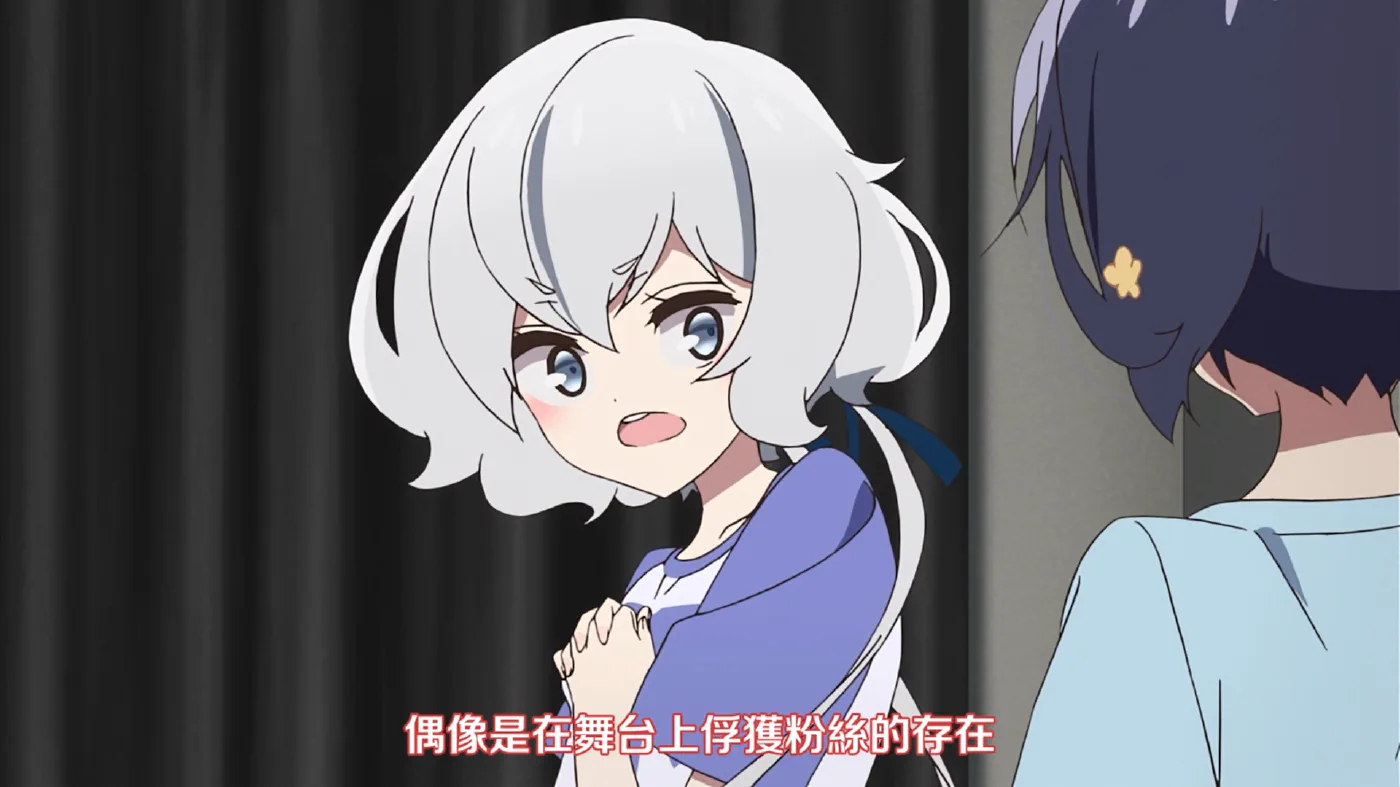

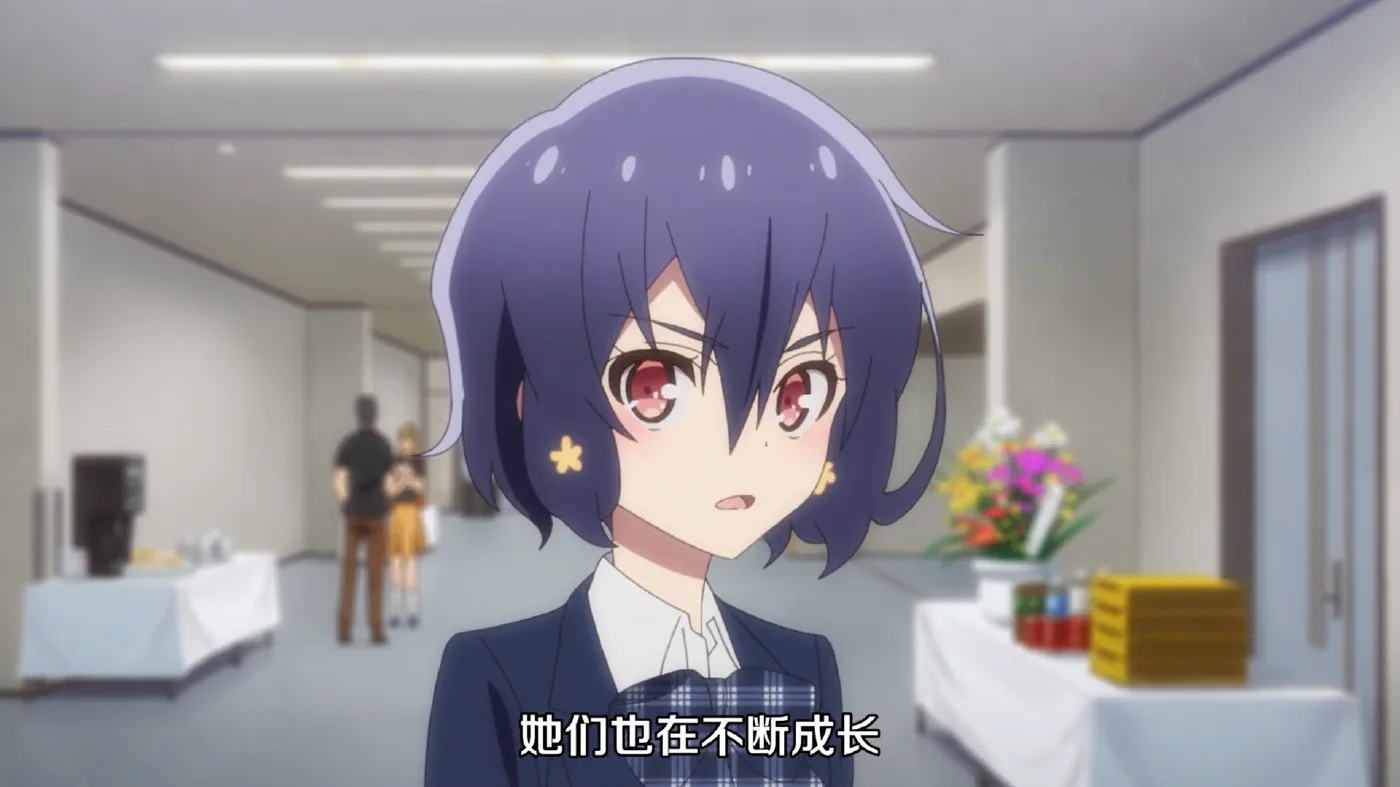
Zombie No. 4: a beautiful corpse with translucent skin and a melancholy expression. Reserved and self-punishing, she holds an unwavering belief in what an “idol” is supposed to be, and has the strongest voice among the seven members of Franchouchou. Born September 2, 1964; died December 6, 1983, in a plane crash, at nineteen years old.
Her name is Konno Junko, a star of the idol boom of the 1980s, a legendary Shōwa idol (伝説の昭和アイドル) — the archetype of what it meant to be a Japanese idol in that era. In the TV anime Zombie Land Saga, she is resurrected by Tazuya Kotaro through unspecified means and enrolled in his plan to save Saga through a zombie idol group.
In Episode 6’s fan meet-and-greet, she says: “An idol is a being who captivates fans from the stage. How is any of this something an idol should be doing?” The Shōwa idol belonged strictly to the television screen — a luminous fiction of the media. In that era, idols were the public’s idea of human perfection: flawless in talent and appearance alike. Junko, a creature of Shōwa, finds herself planted at the seam between Heisei and Reiwa. Her youthful conviction and her anachronism make her incapable of accepting what Japan’s modern idol tradition has become. The fracture of this “idol concept” is also the fracture of her personal identity. Put another way: a modern idol system that has abandoned the Shōwa model means that the idol image she had believed in and pursued her whole life has been cruelly negated by society.
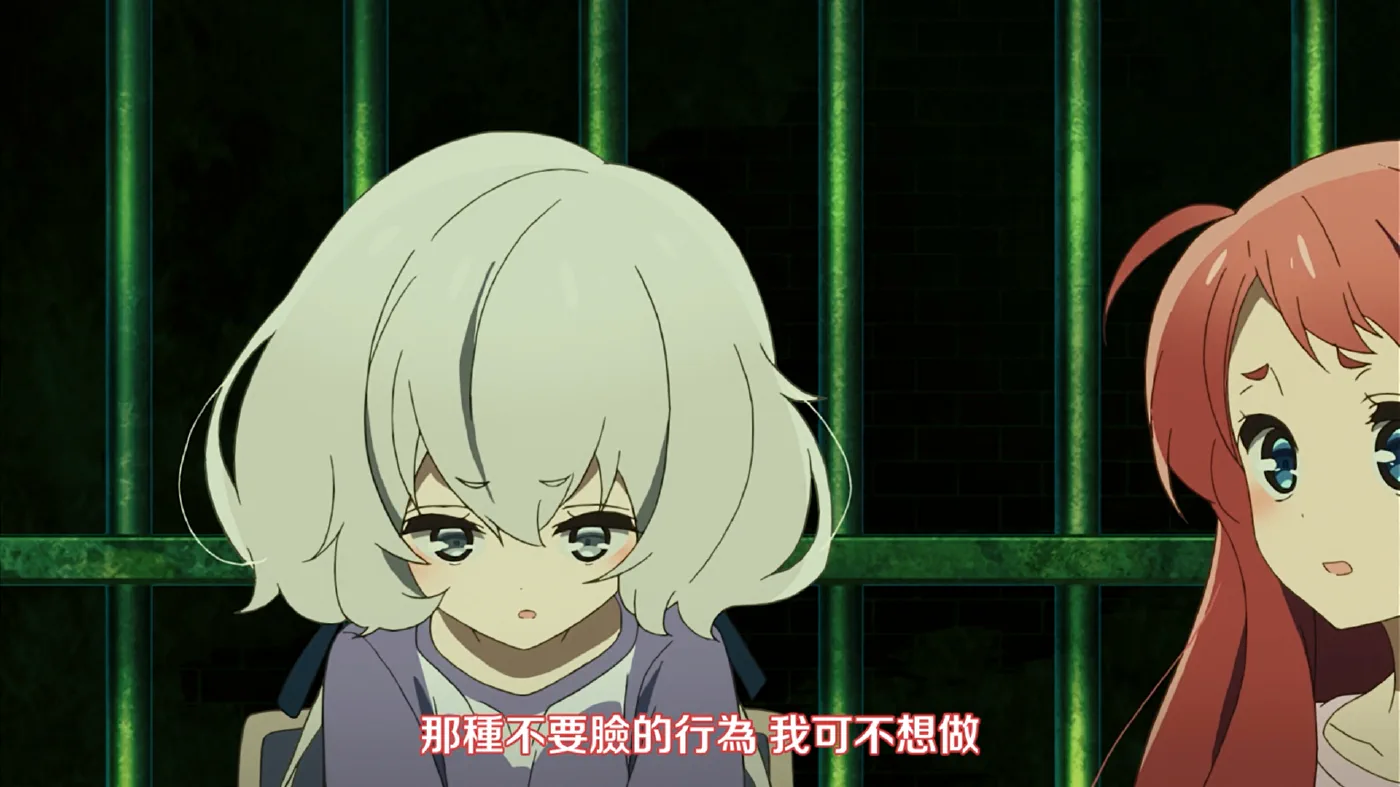
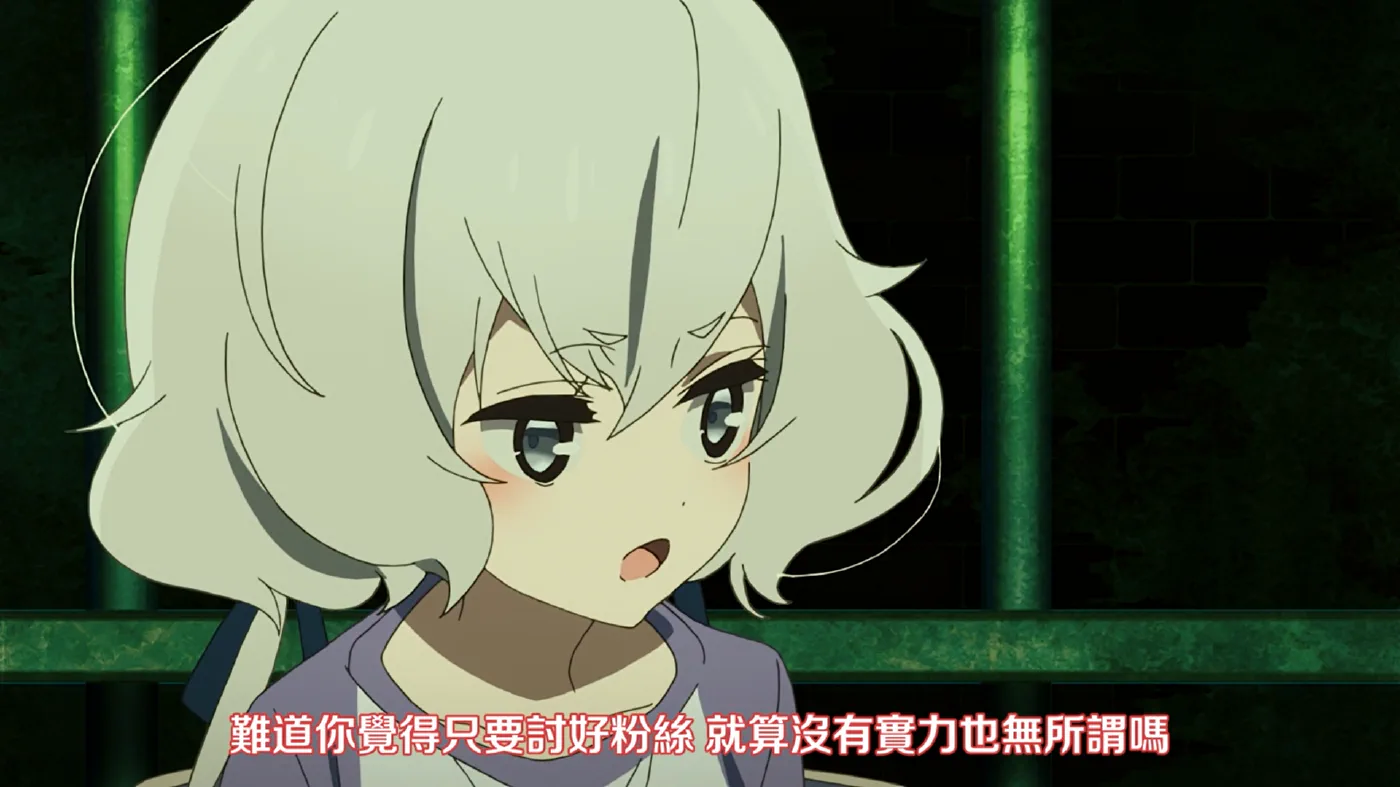
What they embodied was a 20th-century ideal — that idols exist to strive toward the sublime object that exists in the public imagination. An idol should not be approachable; she should not be permitted to interact with ordinary people. She is something to be worshipped, admired, obsessively desired. Television ratings were the primary measure of a Shōwa idol’s popularity; fans seemed to have no direct relation to the idol’s existence. On the surface, an idol without fans was still something worshipped, admired, obsessively desired — because everywhere around her radiated a dazzling light that could not be hidden. “An idol is not a being that depends on the goodwill of fans,” Konno Junko says. Etymologically, “idol worship” originally referred to reverence for totems, mythological figures, ancestors, saints, heroes. Ancestors, obviously, never depended on their descendants’ worship to survive — but the images of ancestors, saints, and heroes: are they fictions constructed inside people’s heads, or actual characteristics a person can possess?
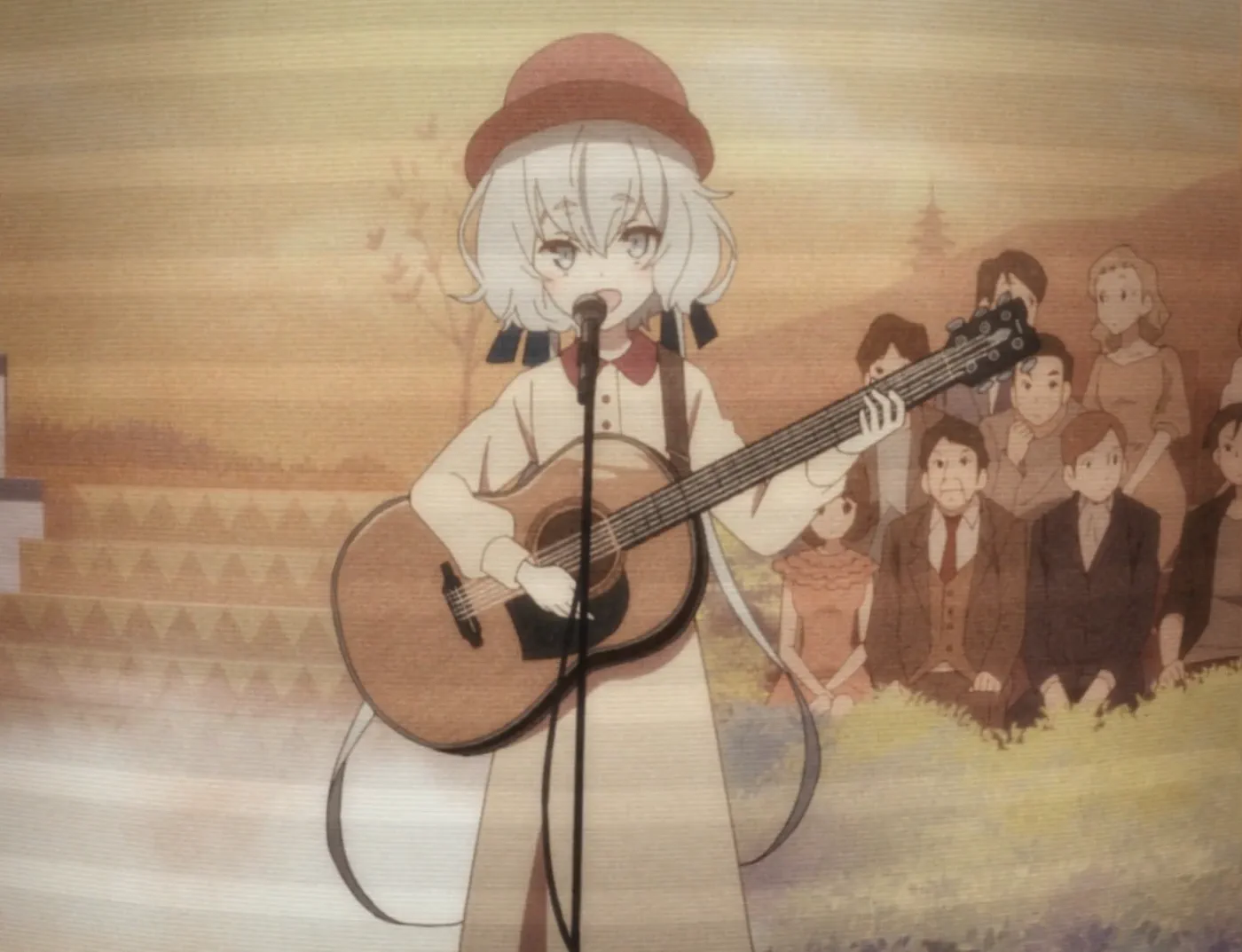

A solitary acoustic guitar, heard by the masses beneath an apricot-yellow sky; you who reflect on miracles under an amber twilight as wild geese pass; gazing at the holy light that spills through the window, scattered across this earthly world. A familiar image on the television screen is obscured by glare; ripples catch the light on a still lake. How far are you from that beam of light?
夕焼けを遠く見送って(目送晚霞消逝远去)
明日が迎えに来てくれるの(明日会来迎接我么)
解けかけ枝 垂れたポ二一テ一ル(快要解开分叉 垂下的马尾辫)
紅く色づいた恋心(浸染唐红色的恋慕之心)
——50 と 4 つの忘れ物
Pure Electronic Instrument — SAGA!
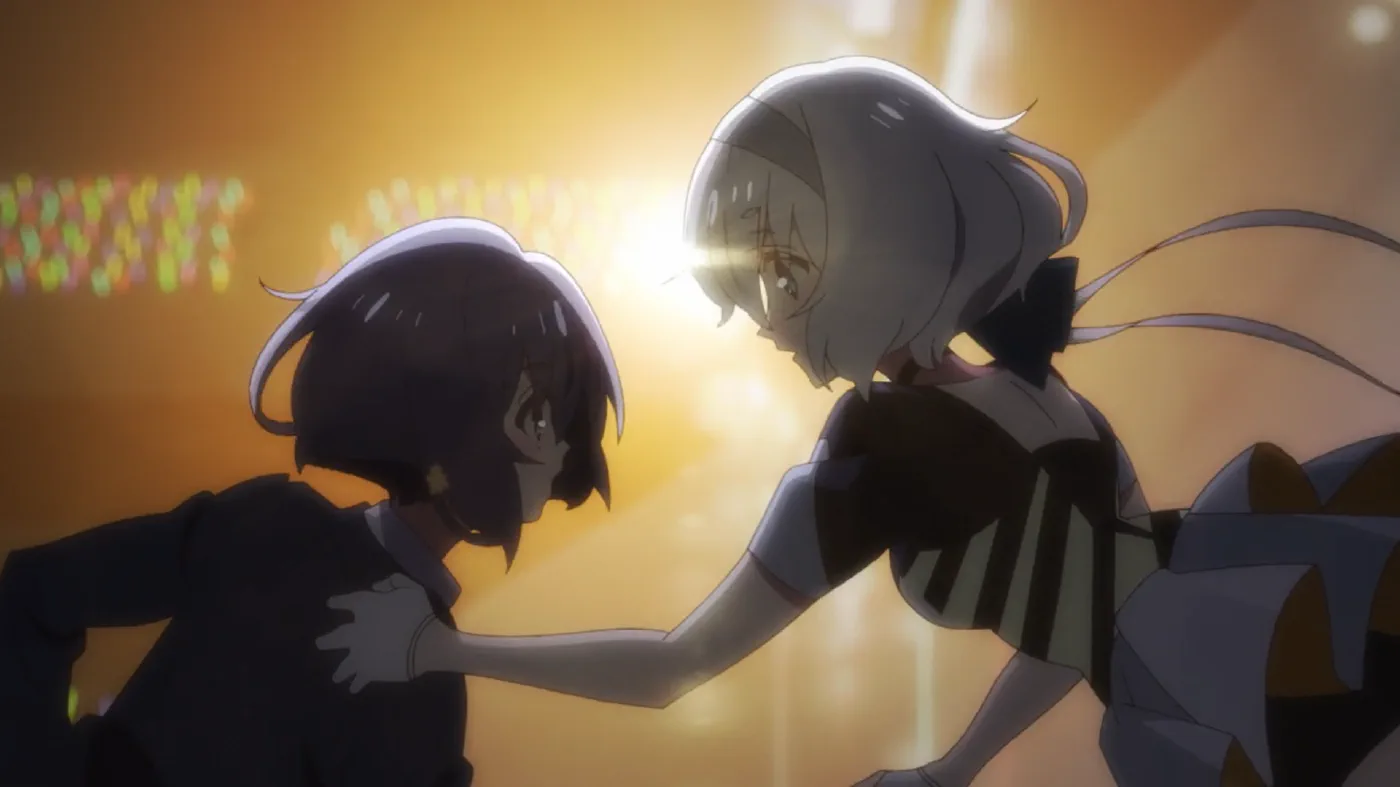
Zombie No. 3: short black hair with a yellow flower-petal clip. Good at singing, but more confident in her dancing. Assertive, never hiding what she really thinks. Born March 7, 1992; died August 4, 2008, at sixteen, struck by lightning while performing at an open-air concert during a thunderstorm. She did not fall — she stood on stage until the end, one finger pointing at the sky. Posterity has called her “the unshakeable center.”
Her name is Mizuno Ai, the undislodgeable center of an idol group that dominated the post-2000 era of idol wars, a legendary Heisei idol (伝説の平成アイドル). In Zombie Land Saga, she is resurrected by Tazuya Kotaro and joins the same plan to save Saga.
In Episode 6, after the fan meet-and-greet, she and Konno Junko get into an argument over their attitudes toward fans. Ai argues that if you want high popularity in a short time, you have to let go of the Shōwa era’s “outdated doctrine of dignity” and focus instead on becoming someone the fans feel close to.


Let me briefly sketch out the transformation in idol culture that underlies this conflict. With the arrival of the Heisei era and the collapse of the bubble economy, music programs began disappearing from television. Media exposure shrank sharply, and idols who had survived on TV were forced to find new ways to exist. The talent search show ASAYAN injected fresh energy into the idol industry. As various accounts describe it, “documentary authenticity” took hold: an idol’s relatability and realness gradually became the standard.
The rise of AKB48 established the basic form of the idol election format. An article tracing the shift from Shōwa to Heisei idol culture notes:
The fans who cast their votes hold the “key” that unlocks the “story.” Fans placed in this position are not just rooting for their chosen member or for AKB48 — they are decision-makers shaping the trajectory of the entire “story.” When fans occupy that position, it signals a fundamental difference between how Heisei idols operate and how Shōwa idols did.
The idol image shifted from the unreachable grandeur of someone like Nakamori Akina’s “Child of the Sun” toward the warm, ordinary “person chasing a dream” embodied by figures like Gotō Maki. A wave of “idol as companion” swept through Japan. Alongside this surface-level shift in image, the implicit target of the idol’s performance shifted too: from “a breathtaking stage prepared with great care” to something that required performing not only on stage but in what might be called the “theater of daily life.” This “theater of daily life,” woven together from the documentary and the scripted, may in fact be more important for Heisei idols than the stage itself.
Erving Goffman’s dramaturgy may offer a theoretical grounding for this shift. Goffman argues that in different situations in everyday life, people act in ways that resemble theatrical performance, shaped by cultural values, social norms, and mutual expectations (Mitchell, 1978). Theater has a front stage and a back stage: the front stage is the part of the setting visible to the audience, which in idol culture is the performance stage; the back stage is more private, accessible only to those with closer relationships. In the course of idol culture’s transformation, idols’ “back stage” seems to have gradually come into view: in Chuang, for instance, the trainees’ daily lives are shown in detail — their effort in rehearsals, their interactions, even their getting made up or sleeping get screen time. Fans feel as though they can directly observe the “back stage,” as though their relationship with their idols has grown more intimate and familiar. But calling this a “back stage” is misleading — it more closely resembles a panopticon. If we apply Foucault’s mechanism of power to Chuang, the “audience’s gaze” functions as a kind of guard, making it impossible for the trainees to genuinely reveal themselves. This “back stage” is nothing but a front stage wearing a back stage’s costume. The trainees in Chuang are still engaged in constant “impression management,” still crafting the image they project to viewers. But unlike the Shōwa idol’s “mystifying performance” — maintaining a certain distance that generates reverence — the performance of Heisei idols and Chuang trainees registers as authenticity, making people feel that they know and are close to their idols. The same study on the shift from Shōwa to Heisei idol culture also notes:
The Heisei idol has already become a way of life. The arena in which they are asked to perform is no longer limited to songs, dramas, or other works — it extends to the full arc of a life, including private life itself. This also aligns with fans’ desire for an idol who can serve as a companion in their own lives.
Fans today worship idols not because they want to revere a god, but because they are seeking a companion for their own life. This connects to ideas about database consumption as well. This is why modern idol shows make such a point of emphasizing the idols’ “growth”: this kind of growth is the dopamine and adrenaline that motivates ordinary people to chase their own dreams. Zombie Land Saga tells exactly this story — seven legendary figures from different eras (except Minamoto Sakura) brought together, grinding through difficulties and growing together to save Saga. This is the documentary and narrative dimension of the modern idol. Idol anime and real-world idols are not directly comparable, of course, but Zombie Land Saga and Chuang share a core emphasis: the idols’ growth and struggle, their interactions and daily lives, and the performances — just without an election. Both can move and motivate.
Inversion and Imbalance: What Did Chuang 2020 Get Wrong?
With that foundation in place, we can turn back to Chuang 2020.
This season’s slogan was “Dare — I have a glory ten thousand feet tall.” The word “dare” ran through everything: courage, effort, the will to push through. There’s nothing wrong with that in principle. But the show seemed to place too much weight on the goal of producing a girl group. It may have been trying to follow the model of Produce 101 China, with the idea of launching “China’s premier idol group” — but the purpose of an idol survival show goes well beyond that.
To start with, the post-formation content for Chuang groups is produced exclusively by Tencent Video, which immediately shuts out everyone without a Tencent Video membership or a VPN. Yet someone with no experience of watching the show from the start has no reason to simply start following a new idol group that has no other variety activity to speak of — the group was bound to face serious obstacles. And that’s before we even get to management. Take INTO1, the male idol group from Chuang 2021: Wayi Wayi’s management of the group after formation looked dim compared to the appeal the show itself had — choreography, camera work, and styling in their performance activities were all widely criticized. Is this what fans signed up to see? And when fans vote for their idol, are they really voting with the goal of “building a top-tier idol group”? I don’t think anyone actually cares about the group — what they care about is whether the person they’ve invested in gets to debut. Capital goes without saying, so the only two forces that actually determine who debuts — fans and capital — are both thinking about individual idols, not the group as a unit. Look at INTO1: Zanmu, who has nearly 20 years of dance experience, and AK Zhang Jiayuan, who had a few months of it, ended up in the same group. A lineup of such varied individual strengths demands a high level of compositional skill to play to everyone’s strengths — but the INTO1 debut choreography seemed to do the opposite, exposing rather than concealing the gaps. (This is not a criticism of AK Zhang Jiayuan himself; it’s that the choreography and production of the debut didn’t let his actual strengths show.) And beyond all that, the group’s formation was not simply a matter of ability — capital had a hand in it too. “Form a group if you’ve got the skill” is not an axiom that applies here. All of this is an aside; my real question is whether fans are watching for the story and documentary reality inside the show, or for the idol group that emerges afterward. I think everyone knows the answer. (For what it’s worth, unlike Produce 101 China, Chuang 2021 didn’t frame itself as an opportunity to develop China’s girl groups; it emphasized international exchange and diversity instead, and it did a much better job on that count.)

When we compare Nakamori Akina to the AKB48 Kami 7, the fundamental difference in narrative becomes clear: fans are no longer moved by watching an idol’s “effort” on screen. Effort is necessary, but effort is not what modern fans consume idols for — and when scenes meant to showcase effort are handled poorly, they tend to generate irritation rather than admiration. To quote again from the study on Shōwa-to-Heisei idol culture: “There is an inherent tension between documentary authenticity and narrative construction. The reason is simple: a narrative is something ‘created,’ while an ‘authentic record,’ by contrast, cannot accommodate too much human intervention.” Bringing us back to Chuang 2020: I noticed a lot of moments that felt artificially arranged and rather awkward. (The reason I say “feel artificially arranged” is precisely because of that awkwardness.)
Take contestant Zhang Yifan, who showed signs of checking out during the theme song evaluation:
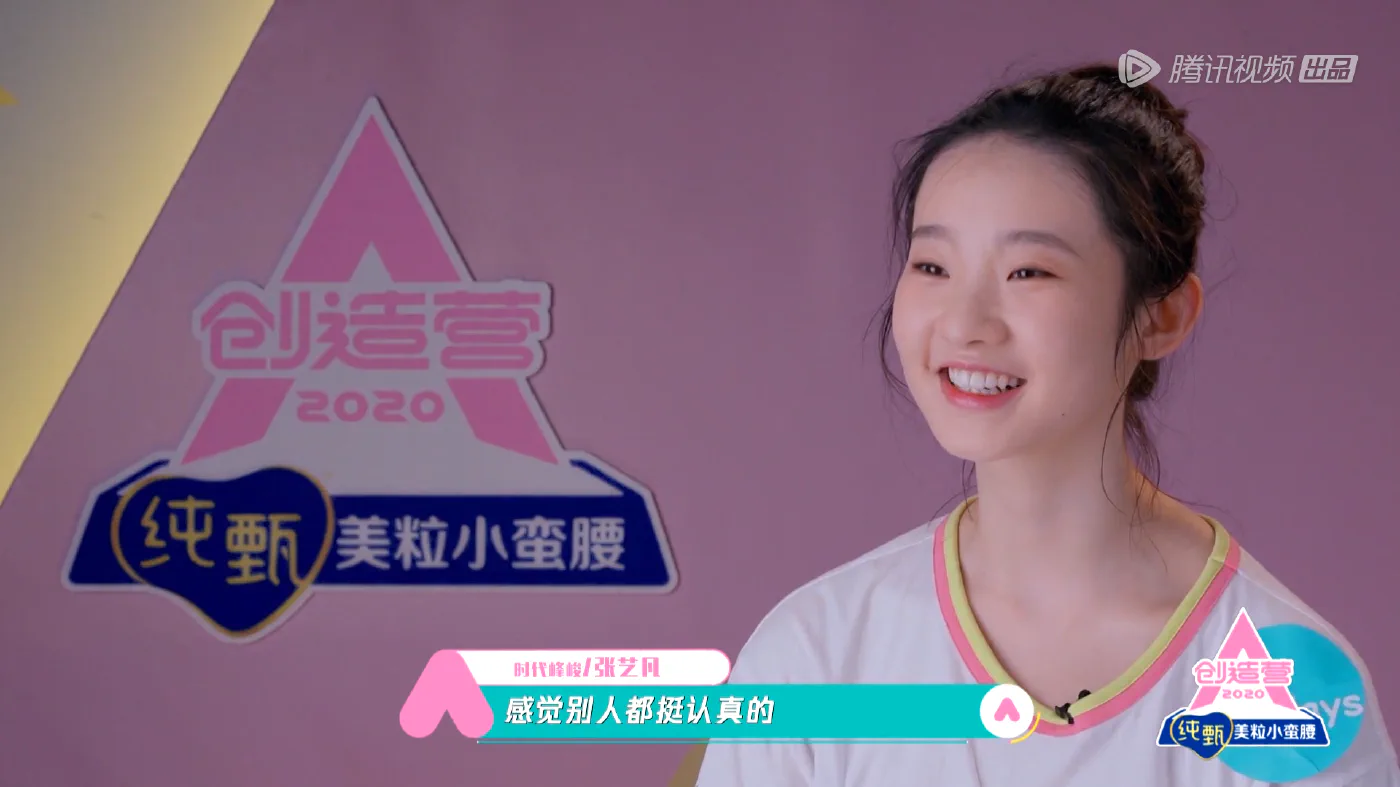
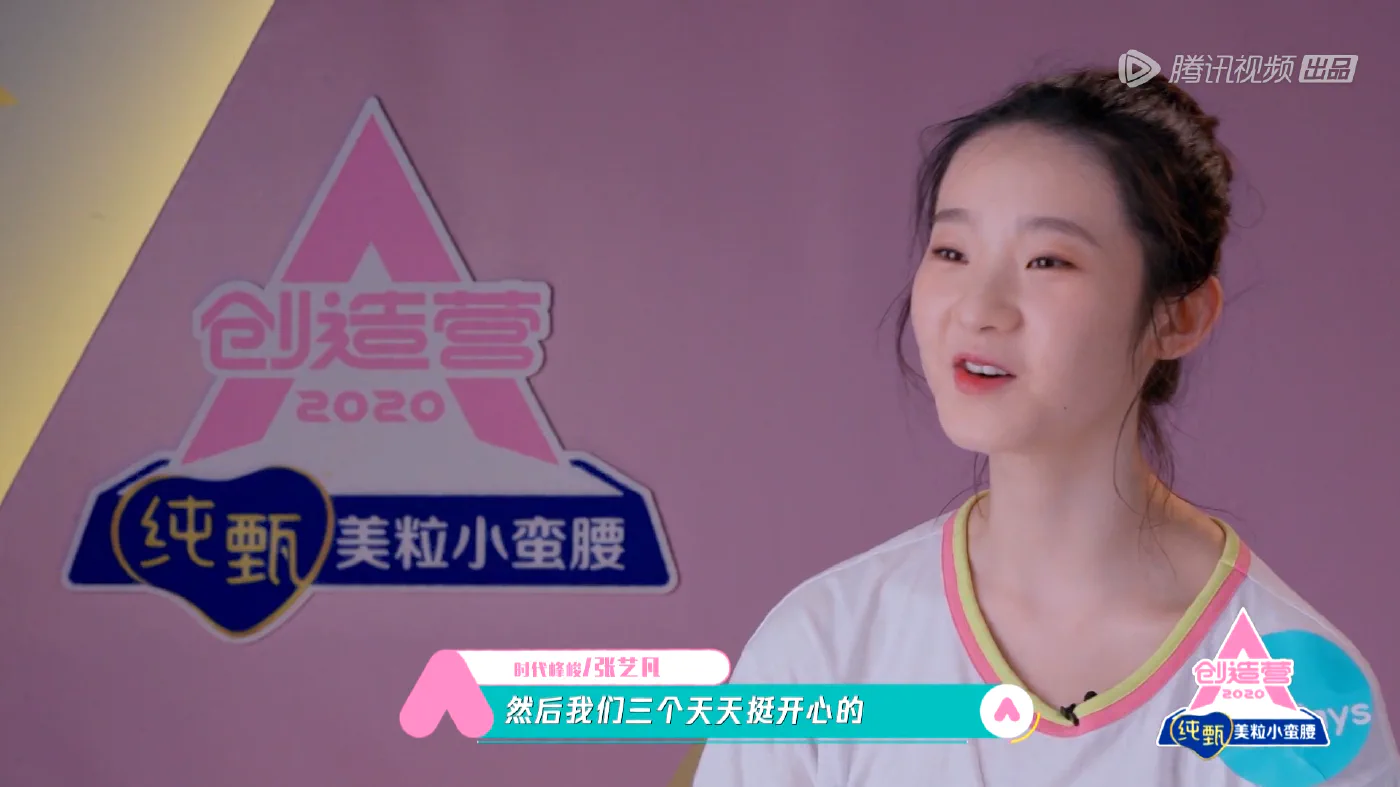
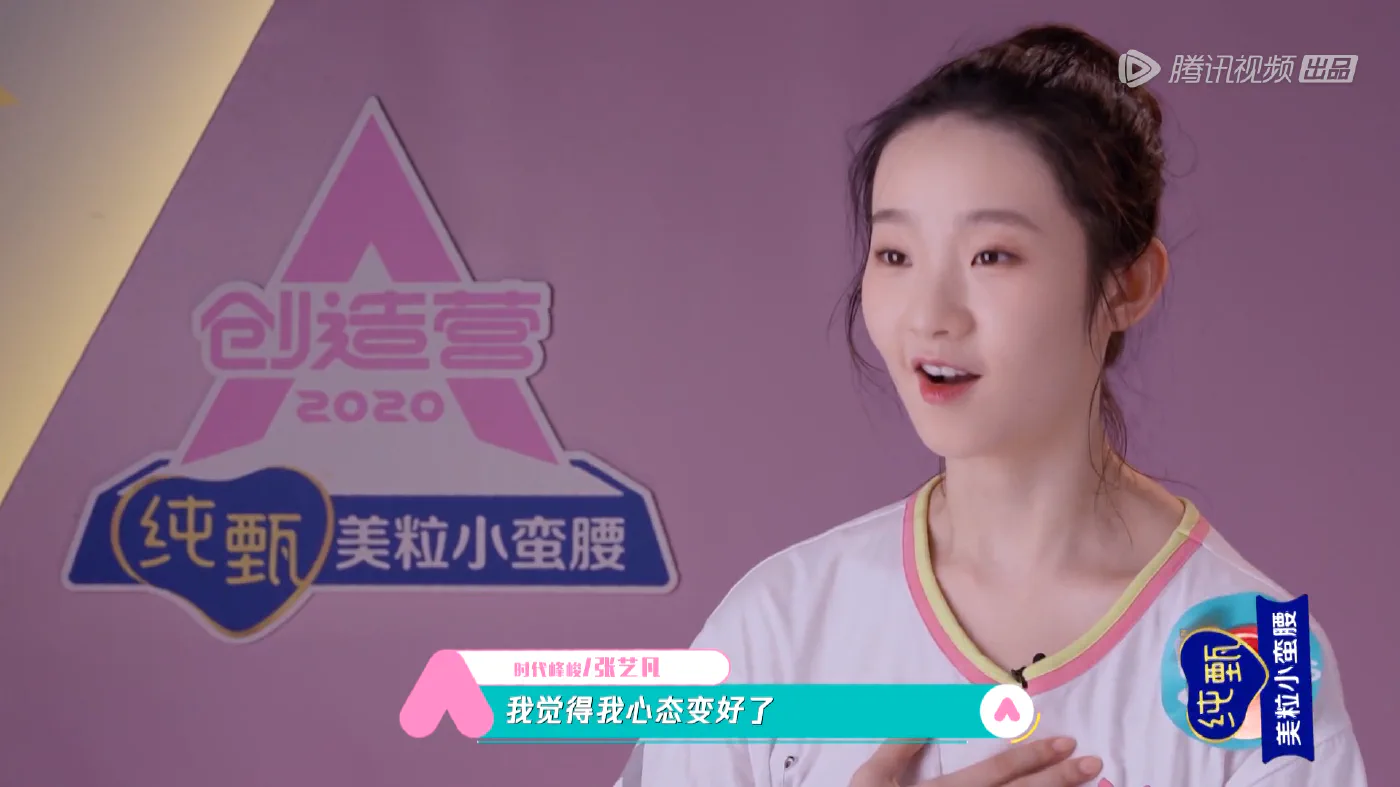
There’s nothing inherently wrong with wanting to check out — everyone feels that way sometimes. But the show then staged a scene where the other trainees console Zhang Yifan, framing it as her cracking under self-imposed pressure:

That storyline doesn’t really hold together for me. One moment she’s playing around happily while others are working seriously; the next she’s on the verge of breaking down. And a teammate explains: “She’s originally a ballet major, and the style she’s dancing now is very different from what she trained in, so it makes sense that she’d cry.”
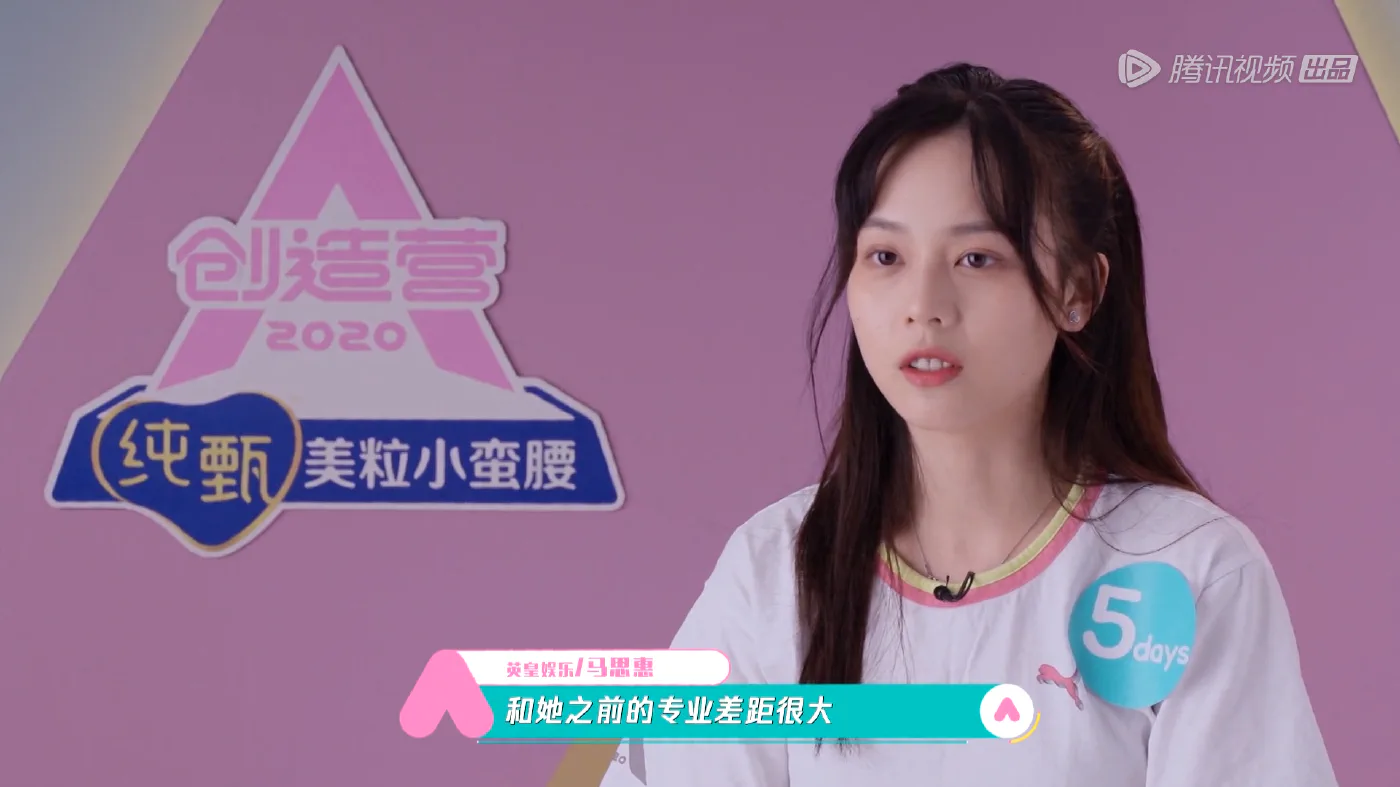
That explanation might hold up, but there are plenty of trainees in this show with no dance background at all. The issue isn’t that Ma Sihui used that reasoning to show understanding for Zhang Yifan — as mentioned earlier, the panopticon of the camp means the trainees are always doing impression management. But The Consumer Society makes a relevant observation:
Thanks to the technology of television and broadcast media, events and the world are edited into continuous, coherent, non-contradictory messages — signs that can be arranged and combined with other signs in the abstract time and space of programming. What we are consuming, then, is not a given scene or image in any original sense: we are consuming the potential of all possible scenes in succession — and the certainty that the editing and sequencing rules of a program will never risk inserting something that doesn’t fit with the rest.
This show involves editing.
The show’s narrative quality is achieved through editing. On stage there is almost no editing possible — just cutting between camera angles — but the daily life that carries the story is constructed almost entirely through editing. Taken further: every shot has been carefully selected; “they will never risk inserting something that doesn’t fit with the rest.” Seen in that light, the carefully arranged, edited storyline above comes across as stiff and unnatural, because its logical gaps are visible. There were other parts of the show’s storyline that felt off too — an excessively harsh elimination format, trainees going days without sleep, the peculiar calligraphic caption inserts. The whole viewing experience was far worse than Chuang 2021 (in my view); possibly Chuang 2021 learned from it.
Overall, as Professor Wang Qin argued in a lecture on “animalized postmodernity” and its discontents using the example of AKB48: an idol’s image actually matters more than their singing and dancing ability. In the current landscape of Chinese idol survival shows, brandishing “effort” as a selling point, circling and highlighting it over and over again, does not genuinely move people. Chuang 2020 may have been too fixated on “girl group selection”: an extremely rigorous elimination system, the whole thing anchored by the slogan “Dare — I have a glory ten thousand feet tall.” But what the show actually produced was an inversion of the Shōwa and Heisei idol models: the production team tried to use the effort-on-display that a Shōwa idol would have kept hidden to embody the daily life and growth of the Heisei idol. Clearly they failed: the narrative felt forced; what should have been shown gave way to what should have been concealed, and the imbalance tanked the viewing experience (in my opinion).
The modern idol system is no longer suited to this Shōwa approach. What it should foreground is proximity. Professor Wang Qin, drawing on psychoanalyst Saitō Tamaki’s Image Psychoanalysis and Azuma Hiroki’s Otaku: Japan’s Database Animals, explains the inner workings of the idol system:
Precisely because — or perhaps owing to the very fact that — the imagined “direct” relationship (or “nurturing model”) built between fan and idol through these activities is nothing more than a fantasy, fans become all the more dependent on this imagined community. The encounter with the “Other” undergoes a cynical reversal among AKB48 fans: AKB48 on one hand continually invokes the ethics of encounter with the other in everyday life, and on the other hand invites people to directly transform this relational context into a “database” — an archive of information that enables the kind of “minor narratives” Azuma Hiroki calls “secondary creation.”
What defines the AKB48 phenomenon is the ironic, unmediated relationship fans have constructed with their idols, and the self-aware mode of “database” consumption that comes with it.
Closing
When fans bought show-branded products in bulk to support their idols and most of it went to waste, the blame was directed at the fans. An article titled “The State Strikes Back: Danmei Adaptations and Idol Survival Shows Shut Down Entirely, Regulators Condemn Idol Culture” declared: “Whether you look at idols or fans, survival shows have reached a turning point. The idols who rise through votes are ultimately nothing but problem artists — and on what basis should these people be idols? Yet fans remain completely unaware of these scandals, continuously pushed and conditioned, keeping up their support for their idols, some going so far as to sink into criminal behavior. It is truly chilling.” Amid the crackdown on fandom disorder, Chuang 2020 attempted to produce a capable, powerful girl group out of the survival format, wrapping it in the “positive energy” of “Dare — I have a glory ten thousand feet tall.” In the end it was still struggling with itself in a murky haze, coated in the dust of a past era. The city of survival shows, overrun with its virus, has since been locked down; those inside who never understood the virus have long since moved on.
When, across this vast terrain, will people finally shed the tattered clothes they have been barely surviving in, and face — and walk into — the animalized postmodernity that has already arrived?
References
- Mitchell, J. N. Social Exchange, Dramaturgy and Ethnomethodology: Toward a Paradigmatic Synthesis. New York: Elsevier. 1978
- Jean Baudrillard, The Consumer Society, p. 113
“Animalized Postmodernity” and Its Discontents: The Cultural Politics of Otaku
From Shōwa to Heisei: Tracing the Evolution of Japan’s “Idol”
The State Strikes Back: Danmei Adaptations and Idol Survival Shows Shut Down Entirely, Regulators Condemn Idol Culture